
Why Is There Blood Under My Menstrual Disc? How to Tell If Your Cervix Is Inside the Disc
If you remove your menstrual disc and notice blood underneath it instead of inside it, your cervix is probably sitting outside the disc rather than inside the basin. This is one of the most common reasons a menstrual disc leaks, especially for new users. The good news is that it's usually an easy fix once you know what to feel for.
In this guide, we'll show you how to tell whether your cervix is actually sitting inside your menstrual disc, how to check that it's tucked securely behind your pubic bone, and what to do if you're still experiencing leaks.
If you're completely new to menstrual discs, we recommend first reading our guide, How to Insert a Pixie Menstrual Disc, or watching our YouTube tutorial. This article assumes you're already familiar with the basic insertion process and focuses specifically on troubleshooting leaks and placement.
How Do I Know if My Menstrual Disc Is Inserted Correctly?
The easiest way to know if your menstrual disc is inserted correctly is by becoming familiar with your anatomy. Specifically, you'll want to know where your cervix and pubic bone are located.

One of the biggest advantages of menstrual discs is that you can practice inserting them before your period starts. Since discs collect menstrual fluid rather than absorb it like a tampon, there's no need to wait until your period begins. Learning while you're comfortable and not dealing with cramps or fatigue makes the process much less stressful.
Step 1: How to Find Your Cervix
During your period, your cervix usually feels similar to the tip of your nose, firm with a small indentation in the center.
Wash your hands and insert a finger into your vagina. Depending on your anatomy, your cervix may be low enough to reach with your first knuckle or high enough that you'll need to insert your finger almost completely. If you want to learn more about how to measure your cervical height, we have a blog post on that, too.
Move your finger in slow circles until you locate it. If you have a lower cervix, you will probably be able to feel around the sides of it.
Keep in mind that your cervix changes position throughout your menstrual cycle, so it may feel slightly different depending on where you are in your cycle.
Once you're comfortable identifying your cervix, it's time to locate your pubic bone.

Step 2: How to Find Your Pubic Bone
Your pubic bone is much easier to find than you might think.
On the outside of your body, you can feel your pubic bone just above your labia.
To feel it internally, insert a finger upward toward the front of your body, and you should be able to hook your finger around it. I actually find this easiest with my middle finger. Internally, this will feel like a firm shelf or ledge. When your menstrual disc is inserted correctly, the front rim rests securely behind this ledge (the side with the stem if you're using a Pixie Disc).
Now that you know what your cervix and pubic bone feel like and where they are located, this will make it much easier to insert your disc correctly.
Note: If it took you a while to find your cervix or pubic bone, it's perfectly okay to take a break before trying to insert your disc again. You may feel a little sore after exploring your anatomy, and that's completely normal.
It personally took me about three weeks before everything finally clicked. However, hopefully with these instructions, you will learn a lot faster than I did!
7 Tips to Make Sure Your Menstrual Disc Is Positioned Correctly
Tip #1: How to Make Sure Your Cervix Is Inside the Disc
If there's one thing to check, it's this. Your cervix must sit inside the basin of the disc. If it sits outside the rim or on top of it, menstrual fluid will flow around the disc instead of into it. That's why you'll often notice blood underneath the disc instead of collected inside it.
Once your disc is inserted, feel around the rim with your finger. Unlike a menstrual cup, a menstrual disc doesn't need to "pop open."Instead, you're checking to make sure your cervix isn't sitting outside the rim or resting on top of it.
If you can feel your cervix outside the rim, try angling your disc farther back or slightly to one side, depending on where you felt your cervix. Basically, point the disc in the direction of the cervix or try to scoop the cervix into the disc so that it sits in the bowl of the period disc.
If you can't feel your cervix around the outside of the rim, that is a good sign! That most likely means it is placed correctly. However, to double-check, press on the belly of the disc, the thinnest part of the product. If you can feel your cervix through the belly, that means all you have to do now is tuck behind your pubic bone!

Tip #2: Try Different Ways to Insert a Menstrual Disc
This video demonstrates three different ways to insert your menstrual disc. This video demonstrates three different ways to insert your menstrual disc that have helped many women successfully position their menstrual discs. I definitely recommend trying these techniques, especially if you've already tried inserting your disc the "typical" way without success. Even though some of these methods might seem a little strange, they've worked really well for many women, so they're definitely worth a shot!
Tip #3: The Slide, Scoop, Tuck Method
This technique is especially helpful if you have a retroverted uterus, but it's worth trying no matter your anatomy. Instead of simply pushing the disc straight back, think of using it like a spoon or small bowl to gently scoop your cervix into the basin of the disc.
Here's how to do it:
- Slide the disc back toward your tailbone.
- Scoop the rim underneath and around your cervix so it falls into the basin.
- Tuck the front rim behind your pubic bone.

Tip #4: Your Disc is the Wrong Size
If your menstrual disc suddenly pops out from behind your pubic bone during a cough, workout, or big movement, it's often a sign that your disc is too large. On the other hand, if your disc feels loose, shifts around frequently, or slowly slips out of place throughout the day, it may actually be too small. If you notice either of these things happening, get the correct size.
One of the things I love about Pixie is our Sizing Guarantee. If you purchase a Pixie Disc and discover you need a different size, simply email info@itspixie.com and we'll send you another size completely free.

Tip #5: Try a Menstrual Disc Applicator
I honestly find the Pixie Disc Applicator to be really helpful, especially if you have a higher cervix and struggle to get your disc far enough back to sit underneath your cervix. It can also be a great option if you have trouble keeping your disc pinched during insertion or if you struggle with mobility or sensory sensitivities. It definitely isn't necessary for everyone, but it can make insertion so much easier for some people.
Tip #6: Try Different Brands
Not all menstrual discs are created the same. While the differences between brands may seem small, those little changes can make a huge difference when it comes to how a disc fits your body.
I've talked to many women who were convinced menstrual discs just didn't work for them. Then they tried a different brand, and suddenly everything worked.
If you aren't currently using a Pixie Menstrual Disc and you're having trouble with your disc, I'd definitely recommend giving ours a try. On the other hand, if you're already using a Pixie Disc and it hasn't worked for you, try another brand! We genuinely want you to find a reusable period product that works for your body. At the end of the day, our goal is to help you experience period freedom, even if that doesn't come from one of our products.

Tip #7: Consider a Menstrual Cup
Unfortunately, there are cases where a menstrual disc just isn't the right fit for your anatomy. If you don't have a very pronounced pubic bone or you have a severely tilted cervix or uterus, it can be difficult for a menstrual disc to stay in place.
It can definitely be discouraging, but I encourage you not to give up on reusable period products! Instead, try a menstrual cup. In my experience, nine out of ten times, if a menstrual disc doesn't work for someone, a menstrual cup does. Sometimes it's simply a matter of finding the product that works best with your body.

Those are all the tips I have! I really hope they help you get your menstrual disc positioned correctly so it stays secure and you can wear it all day without leaks!
If you still have questions, feel free to leave a comment below, or if you have advice for other women who struggle with their discs leaking, leave a comment too! Lastly, you can also email our customer service team, and we would be happy to troubleshoot with you!
Our Top Picks For You
-
Period Disc & Applicator Kit
![]()
![Period Disc & Applicator Kit]()
![Period Disc & Applicator Kit]()
![Period Disc & Applicator Kit]()
![Period Disc & Applicator Kit]()
![Period Disc & Applicator Kit]()
![Period Disc & Applicator Kit]()
![Period Disc & Applicator Kit]()
![Period Disc & Applicator Kit]()

- Regular price
- $49
- Sale Price
- Regular price
-
- $49
- Unit price
- per
Bestseller Bundle & Save -
Combo Disc + Applicator Bundle
![]()
![Combo Disc + Applicator Bundle]()
![Combo Disc + Applicator Bundle]()
![Combo Disc + Applicator Bundle]()
![Combo Disc + Applicator Bundle]()
![Combo Disc + Applicator Bundle]()
![Combo Disc + Applicator Bundle]()
![Combo Disc + Applicator Bundle]()
![Combo Disc + Applicator Bundle]()

- Regular price
- $39
- Sale Price
- Regular price
-
- $39
- Unit price
- per
Bestseller Bundle & Save -
Disposable Organic Cotton Pads
![]()
![Disposable Organic Cotton Pads]()
![Disposable Organic Cotton Pads]()
![Disposable Organic Cotton Pads]()
![Disposable Organic Cotton Pads]()
![Disposable Organic Cotton Pads]()
![Disposable Organic Cotton Pads]()
![Disposable Organic Cotton Pads]()
![Disposable Organic Cotton Pads]()
![Disposable Organic Cotton Pads]()
![Disposable Organic Cotton Pads]()
![Disposable Organic Cotton Pads]()
![Disposable Organic Cotton Pads]()
![Disposable Organic Cotton Pads]()
![Disposable Organic Cotton Pads]()
![Disposable Organic Cotton Pads]()
![Disposable Organic Cotton Pads]()
![Disposable Organic Cotton Pads]()
![Disposable Organic Cotton Pads]()
![Disposable Organic Cotton Pads]()
![Disposable Organic Cotton Pads]()
![Disposable Organic Cotton Pads]()
![Disposable Organic Cotton Pads]()
![Disposable Organic Cotton Pads]()
![Disposable Organic Cotton Pads]()
![Disposable Organic Cotton Pads]()
![Disposable Organic Cotton Pads]()
![Disposable Organic Cotton Pads]()
![Disposable Organic Cotton Pads]()
![Disposable Organic Cotton Pads]()

- Regular price
- $7
- Sale Price
- Regular price
-
- $7
- Unit price
- per
Save 25% Bestseller -
Combo Cup + Applicator
![]()
![Combo Cup + Applicator]()
![Combo Cup + Applicator]()
![Combo Cup + Applicator]()
![Combo Cup + Applicator]()
![Combo Cup + Applicator]()
![Combo Cup + Applicator]()
![Combo Cup + Applicator]()
![Combo Cup + Applicator]()
![Combo Cup + Applicator]()
![Combo Cup + Applicator]()
![Combo Cup + Applicator]()
![Combo Cup + Applicator]()

- Regular price
- $39
- Sale Price
- Regular price
-
- $39
- Unit price
- per
Bestseller Bundle & Save -
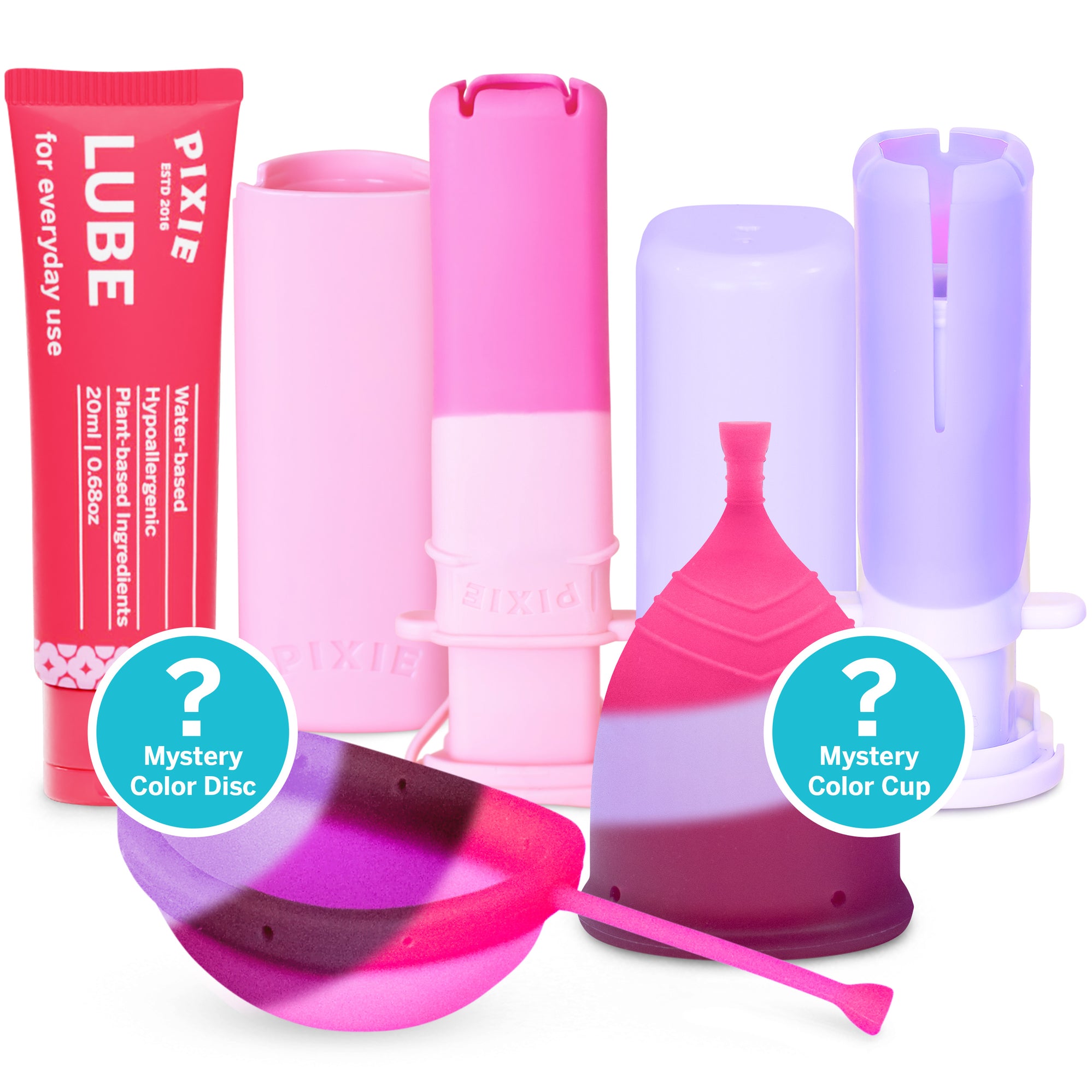
Cup & Disc + Applicators Kit
![]()
![Cup & Disc + Applicators Kit]()
![Cup & Disc + Applicators Kit]()
![Cup & Disc + Applicators Kit]()
![Cup & Disc + Applicators Kit]()
![Cup & Disc + Applicators Kit]()
![Cup & Disc + Applicators Kit]()
![Cup & Disc + Applicators Kit]()
![Cup & Disc + Applicators Kit]()
![Cup & Disc + Applicators Kit]()
![Cup & Disc + Applicators Kit]()
![Cup & Disc + Applicators Kit]()
![Cup & Disc + Applicators Kit]()
![Cup & Disc + Applicators Kit]()
- Regular price
- $44
- Sale Price
- Regular price
-
$49 - $44
- Unit price
- per
Sale Bundle & Save -
Individual Wipes - Rosewater
![]()
![Individual Wipes - Rosewater]()
![Individual Wipes - Rosewater]()
![Individual Wipes - Rosewater]()
![Individual Wipes - Rosewater]()
![Individual Wipes - Rosewater]()
![Individual Wipes - Rosewater]()
![Individual Wipes - Rosewater]()
![Individual Wipes - Rosewater]()
![Individual Wipes - Rosewater]()
![Individual Wipes - Rosewater]()
![Individual Wipes - Rosewater]()
![Individual Wipes - Rosewater]()
![Individual Wipes - Rosewater]()
![Individual Wipes - Rosewater]()
![Individual Wipes - Rosewater]()
![Individual Wipes - Rosewater]()
![Individual Wipes - Rosewater]()
![Individual Wipes - Rosewater]()

- Regular price
- $5
- Sale Price
- Regular price
-
- $5
- Unit price
- per
Save 25% Bestseller -
Organic Cotton Tampons
![]()
![Organic Cotton Tampons]()
![Organic Cotton Tampons]()
![Organic Cotton Tampons]()
![Organic Cotton Tampons]()
![Organic Cotton Tampons]()
![Organic Cotton Tampons]()
![Organic Cotton Tampons]()
![Organic Cotton Tampons]()
![Organic Cotton Tampons]()
![Organic Cotton Tampons]()
![Organic Cotton Tampons]()
![Organic Cotton Tampons]()
![Organic Cotton Tampons]()
![Organic Cotton Tampons]()
![Organic Cotton Tampons]()
![Organic Cotton Tampons]()
![Organic Cotton Tampons]()
![Organic Cotton Tampons]()
![Organic Cotton Tampons]()

- Regular price
- $9
- Sale Price
- Regular price
-
- $9
- Unit price
- per
Save 25% New Arrival -
Lower Back & Abdomen Heat Patch
![]()
![Lower Back & Abdomen Heat Patch]()
![Lower Back & Abdomen Heat Patch]()
![Lower Back & Abdomen Heat Patch]()
![Lower Back & Abdomen Heat Patch]()
![Lower Back & Abdomen Heat Patch]()
![Lower Back & Abdomen Heat Patch]()
![Lower Back & Abdomen Heat Patch]()

- Regular price
- $9
- Sale Price
- Regular price
-
- $9
- Unit price
- per
Save 25% -
Individual Wipes - Chamomile Couture
![]()
![Individual Wipes - Chamomile Couture]()
![Individual Wipes - Chamomile Couture]()
![Individual Wipes - Chamomile Couture]()
![Individual Wipes - Chamomile Couture]()
![Individual Wipes - Chamomile Couture]()
![Individual Wipes - Chamomile Couture]()
![Individual Wipes - Chamomile Couture]()
![Individual Wipes - Chamomile Couture]()
![Individual Wipes - Chamomile Couture]()
![Individual Wipes - Chamomile Couture]()
![Individual Wipes - Chamomile Couture]()
![Individual Wipes - Chamomile Couture]()

- Regular price
- $6
- Sale Price
- Regular price
-
- $6
- Unit price
- per
Save 25%


